Q: What’s one “imperfect” thing in your home you’d never change?
LF: My hand-painted checkerboard floors in the pantry and bathroom at our Pennsylvania home. They are far from perfect — uneven lines, brush marks, little imperfections everywhere — but that’s exactly why I love them. I specifically made sure they weren’t done with tape because I wanted them to feel perfectly imperfect. There’s something really special about seeing the human touch in a home.
In the book, I actually share the recipe for how we did them because I think people get too intimidated by the idea that everything has to be precise or professionally done. Some of the most beautiful things in a house happen when you just go for it. Honestly, we did this as a budget-friendly hack initially to give new life to a few areas where the flooring had seen better days, but I didn’t want to pay to fully replace them. And considering it only cost me the price of a can of paint and a paintbrush, it’s become one of my favorite moments in the house. I’d do it over and over again.
Q: What’s a design choice you used to avoid but now fully love?
LF: Contrary to popular belief… I do not actually paint EVERYTHING white. Ha! But I will admit I was definitely hesitant to fully embrace color stories in a home for a long time. I’ve always naturally gravitated toward tonal spaces and earthy neutrals because I have so much going on in this brain of mine, I need a space to feel calming and not overly stimulating.
But I really got pushed out of my comfort zone while collaborating with Grace Mitchell on our shared property down in Round Top, Texas. During our first “Rough Housers” project together, I was still a little hesitant — it was still all creamy, dreamy shades of white. But by the time we got to round two— where basically the entire house lives in shades of pink — I finally “Embraced the Grace,” as we like to joke. Meaning: I let myself fully commit to a color story.
And honestly, it was such an incredible creative exercise. But we still did it in a way that felt authentic to me because it was still monochromatic… just in shades of pink this time. Everything stayed tonal and earthy. It was dusty clay tones, worn shades of rose, muddy blushes, terracottas, and a whole lot of our custom paint color, “Peige” — colors pulled from nature, not made in a paint company’s conference room. It completely changed the way I think about color in interiors.
Q: What’s an unexpected item you think can instantly make a home feel cooler?
LF: Your personality. Truly. I actually have an entire chapter in the book dedicated to this because I think it’s the thing people forget most when decorating. Have some fun with it. Decorate with books you love, music you love, little knickknacks you’ve collected over the years. Tack your favorite love note right onto the wall. Put sunglasses on a bust head. Let your house speak for who you are instead of trying to make it look like everyone else’s.
And lighting. Lighting changes EVERYTHING. Swap out your builder-grade fixtures whenever you can — but honestly, even just swapping your lightbulbs for warm, low-wattage bulbs and putting everything on dimmers can completely transform the feeling of a home. Good lighting makes people look better, feel better, and want to stay awhile.
Q: If your design style had a soundtrack, what song would be playing while we flip through the new book?
LF: Honestly? Probably a mix of “Pure Imagination” from Willy Wonka & the Chocolate Factory and “Help!” by The Beatles. Ha!
“Pure Imagination” because that’s really the spirit of this book. I want people to approach their homes with more creativity, curiosity, and play instead of so many rules. The best spaces happen when you let yourself dream a little.
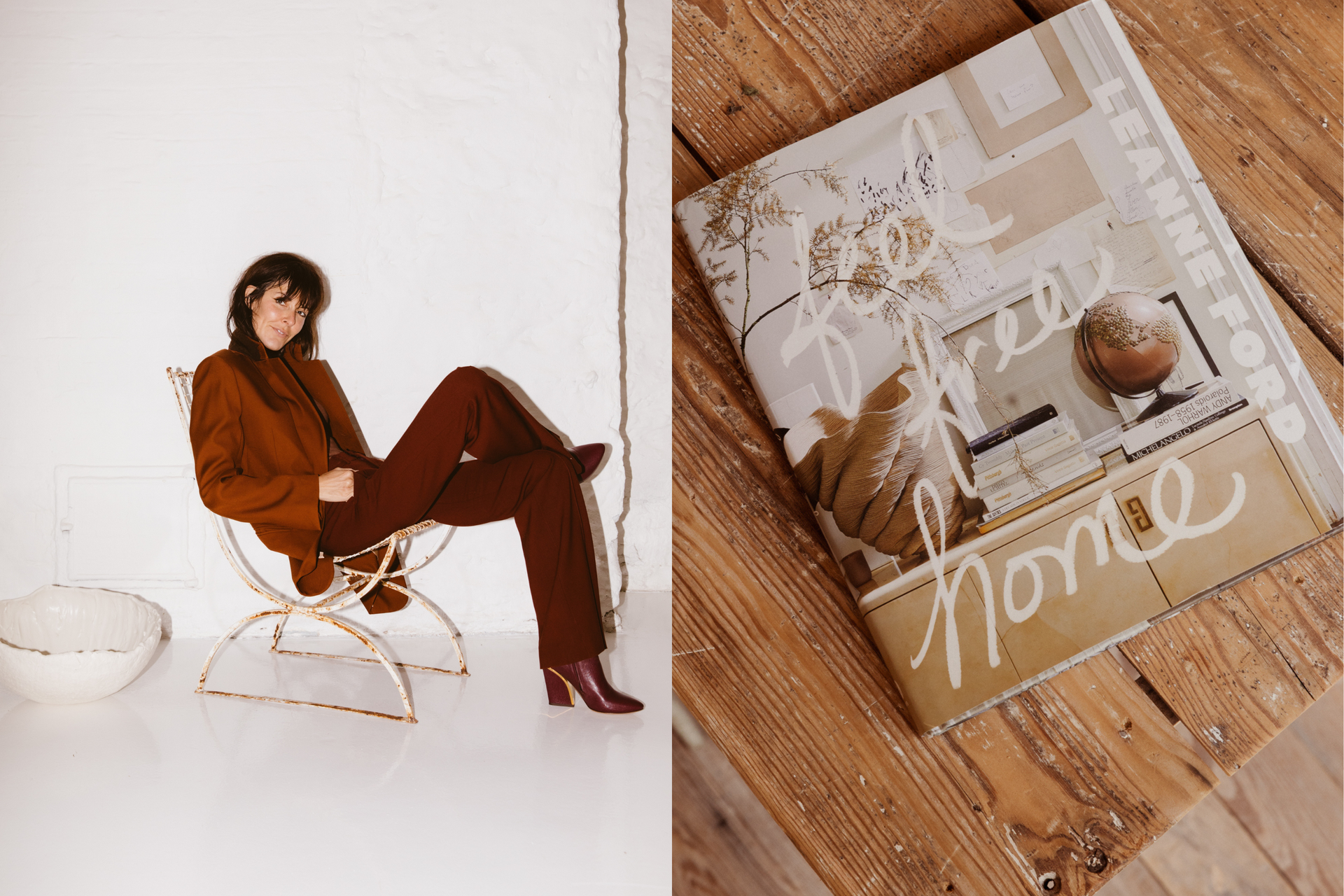
But also “Help!” because home renovation can make all of us cry sometimes… even the professionals. And honestly, that’s part of why this book exists, too. It’s here to help. It’s here to make people think in new ways, explore new ideas, and problem solve during the toughest moments of creating a home. I want people to reach for this book every time they start feeling stuck — not because it gives rigid rules or “perfect” answers but because hopefully it reminds them to loosen up, trust their instincts, and get creative again.
Q: What’s one decorating risk you took in the book that totally paid off?
LF: The coffee-stained walls over at the cottage on our Pennsylvania property. That one definitely required a leap of faith. We literally used coffee to stain the walls because I wanted them to feel aged, warm, and like they’d quietly existed there forever.
A lot of people would probably hear “coffee walls” and think we’d completely lost it. Ha! But honestly, they turned out so rich and soulful and layered. The walls have this depth and softness to them that regular paint just wouldn’t have achieved.
I think that project really captures the spirit of the whole book actually — using what you have, experimenting a little, not being afraid to get your hands dirty, and trusting that “imperfect” can end up being the most beautiful part.